SelfDefinition.Org
Sutra Spoken By The Sixth Patriarch
On the High Seat of the Treasure of the Law
Hui Neng
This section needs work. Sorry.
Christmas Humphreys Edition (1952)
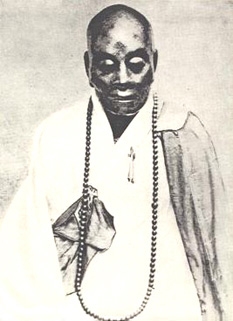
Appendix by Ling To [1]
APPENDIX BY LING TO, THE STUPA KEEPER
At midnight of the 3rd day of the 8 th Moon of the Year of Yen Sheu, in the 10th year of the Hoi Yuen Era, noises similar to those made by the dragging of an iron chain were heard within the stupa in which the Patriarch's remains were enshrined. Awakened by the alarm, the Bhikkhus saw a man in mourning run out from the pagoda. Subsequently, they found that injuries had been inflicted on the Patriarch's neck. Reports were duly made to Prefect Liu Wu Tim and Magistrate Young Han. Upon receiving the complaint they made a vigilant search for the culprit, who five days after was arrested in Shek Kwok Village and sent to Shiu Chow for trial.
He stated that his name was Chang Ching Mun, a native of Leung Yuen of U Chow, and that in Hoi Yuen Monastery of Hung Chow he had received two thousand cash from a Sun Lo (a state in Korea) Bhikkhu named Kam Tai Pi, who ordered him to steal the Patriarch's head to be sent back to Korea for veneration.
Having taken this statement Prefect Liu reserved judgment, and went personally to Tso Kai to consult the Patriarch's senior disciple, Ling To, as to the adequate sentence to be passed. Ling To said, "According to the law of the state, the death sentence should be passed. But as mercy is the keynote of Buddhism, which teaches that kindred and enemies should be treated alike, coupled with the fact that religious veneration is the motive for the crime, the offender may be pardoned." Much impressed, Prefect Liu exclaimed, "Now I begin to realise how liberal and broad-minded the Buddhists are!" The prisoner was accordingly set free.
Emperor Shiu Chung, who wished to do veneration to the Patriarch's robe and bowl, sent an ambassador to Tso Kai to escort them with due respect to the royal palacc. They were kept there until the 1st Year of Wing Tai, when Emperor Tau Chung had a dream in the night of the 5th day of the •r>th Moon that the Patriarch asked him to return the relics. On the 7 th day of the same moon, the following edict addressed to Young Kan was issued:
"Whereas His Majesty dreamt that Dhyana Master Wei Lang asked for the restitution of the inherited robe and bowl, Marshal Chan Kwok ('Pillar of State,' a title of honour) Lau Sung King is hereby detailed to convey them with due reverence to Tso Kai. These relics are regarded by His Majesty as state valuables, and you are directed to store them properly in Po Lam Monastery and give express orders to the Bhikkhus, who had received personal instructions from the Patriarch, to exercise special care for their protection, so that no loss or breakage may be suffered."
Thereafter, the relics were stolen several times, but on each occasion they were recovered before the thief could run away far.
Emperor Hin Chung conferred on the Patriarch the Posthumous title 'Tai Kam' (the great mirror, or the great seer) and wrote the epigraph 'Un Wo Ling Chiu' (Harmonious spirit shines forth divinely) for the stupa.
Other biographical materials are to be found in the tablets recording the life of the Patriarch written by Chancellor Wong Wei, Prefect Liu Chung Un, Prefect Lau Shik, and others, all of the Tang Dynasty.
1 was told long ago that the inheritor of the Fifth Patriarch's robe and Dharma had come to the South. Very likely you are the man."
To this I politely assented. He immediately made obeisance and asked me to show the assembly the robe and the begging bowl which I had inherited.
He further asked what instructions I had when the Fifth Patriarch transmitted me the Dharma. "Apart from a discussion on the realisation of the Essence of Mind," I replied "he gave me no other instruction, nor did he refer to Dhyana and Emancipation." "Why not?" he asked. "Because that
Bottom of page MISSING.