SelfDefinition.Org
Sutra Spoken By The Sixth Patriarch
On the High Seat of the Treasure of the Law
Hui Neng
This section needs work. Sorry.
Christmas Humphreys Edition (1952)
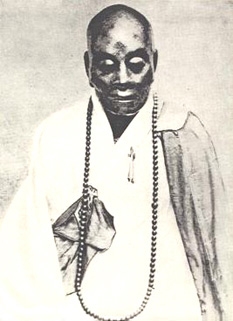
IV On Repentance [1]
6. ON REPENTANCE
Once there was a big gathering of scholars and commoners from Kwong Chow, Shiu Chow, and other places to wait upon the Patriarch to preach to them. Seeing this, the Patriarch mounted the pulpit and delivered the following address:—
In Buddhism, we should start from our Essence of Mind. At all times let us purify our own mind from one Ksana to another, treat the Path by our own efforts, realise our own Dharmakaya, realise the Buddha in our own mind, and deliver ourselves by a personal observance of the Silas; then your visit will not have been in vain. Since all of you have come from afar, the fact of our meeting here shows that there is a good affinity between us. Now let us sit down in the Indian fashion, and I will give you the 'Formless' Repentance.
When they had sat down, the Patriarch continued:—The first is the Sila Incense, which means that our mind is free from taints of misdeeds, evil, jealousy, avarice, anger, spoliation, and hatred. The second is the Samadhi Incense, which means that our mind is unperturbed in all circumstances, favourable or unfavourable. The third is the Prajna Incense, which means that our mind is free from all impediments, that we constantly introspect our Essence of Mind with wisdom, that we refrain from doing all kinds of evil deeds, that although we do all kinds of good acts, yet we do not let our mind become attached to (die fruits) of such actions, and that we are respectful towards our superiors, considerate to our inferiors, and sympathetic to the destitute and the poor. The fourth is the Incense of Liberation, which means that our mind is in such an absolutely free state that it clings to nothing and concerns itself neither with good nor evil. The fifth is the Incense of 'Knowledge obtained on the Attainment of Liberation.' When our mind clings to neither good nor evil, we should take care not to let it dwell upon Vacuity, or remain in a state of inertia. Rather should we enlarge our study and broaden our knowledge, so that we can know our own mind, understand thoroughly the principles of Buddhism, be congenial to others in our dealings with them, get rid of the idea of 'self' and that of 'being,' and realise that up to the time when we attain Bodhi the 'true nature' (or Essence of Mind) is always immutable. Such, then, is the Incense of 'Knowledge obtained on the Attainment of Liberation.' This nve-fold Incense fumigates us from within, and we should not look for it from without.
Now I will give you the 'Formless' Repentance which will expiate our sins committed in our present, past, and future lives, and purify our Karmas of thought, word and deed.
Learned Audience, please follow me and repeat together what I say.
May we, disciples so and so, be always free from the taints of ignorance and delusion. We repent of all our sins and evil deeds committed under delusion or in ignorance. May they be expiated at once and may they never arise again.
May we be always free from the taints of arrogance and dishonesty (Sathya).. We repent of all our arrogant behaviour and dishonest dealings in the past. May they be expiated at once and may they never arise again.
May we be always free from the taints of envy and jealousy. We repent of all our sins and evil deeds committed in an envious or jealous spirit. May they be expiated at once and may they never arise again.
Learned Audience, this is what we call 'Formless Chen Fu' (repentance). Now what is the meaning of Chen and Fu (Ksamayati)? Chen refers to the repentance of past sins. To repent of all our past sins and evil deeds committed under delusion, ignorance, arrogance, dishonesty, jealousy, or envy, etc., so as to put an end to all of them is called Chen. Fu refers to that part of repentance concerning our future conduct. Having realised the nature of our transgression (we make a vow) that hereafter we will put an end to all kinds of evil committed under delusion, ignorance, arrogance, dishonesty, jealousy, or envy, and that we shall never sin again. This is Fu.
On account of ignorance and delusion, common people do not realise that in repentance they have not only to feel sorry for their past sins but also to refrain from sinning in the future. Since they take no heed of their future conduct, they commit new sins before the past are expiated. How can we call this 'Repentance1
Learned Audience, having repented of our sins, we will take the following four all-embracing vows.
We vow to deliver an infinite number of sentient beings of our own mind.*
We vow to get rid of the innumerable defilements in our own mind.
We vow to learn the countless systems in Dharma of our Essence of Mind.
We vow to attain the Supreme Buddhahood of our Essence of Mind.
Learned Audience, all of us have now declared that we vow to deliver an infinite number of sentient beings; but
• Buddhists believe that all things are nothing but phenomena in mind.
what does that mean? It does not mean that I, Wei Lang, am going to deliver them. And who are these sentient beings within our mind? They are the delusive mind, the deceitful mind, the evil mind, and such like minds—all these are sentient beings. Each of them has to deliver himself by means of his own Essence of Mind. Then the deliverance is genuine.
Now, what does it mean to deliver oneself by one's own Essence of Mind? It means the deliverance of the ignorant, the delusive, and the vexatious beings within our mind by means of Right Views. With the aid of Right Views ana Prajna-Wisdom, the barriers raised by these ignorant and delusive beings may be broken down; so that each of them is in a position to deliver himself by his own efforts. Let the fallacious be delivered by Tightness; the deluded by enlightenment; the ignorant by wisdom; and the malevolent by benevolence. Such is genuine deliverance.
As to the vow, 'we vow to get rid of the innumerable evil passions in the mind' it refers to the substitution of our unreliable and illusive thinking faculty by the Prajna-Wisdom of our Essence of Mind.
As to the vow, 'we vow to learn eountless systems of Dharmas,' it may be remarked that there will be no true learning until we have seen face to face our Essence of Mind, and until we conform to the orthodox Dharma on all occasions.
As to the vow, 'we vow to attain Supreme Buddhahood,' I wish to point out that when we are able to bend our mind to follow the true and orthodox Dharma on all occasions, and when Prajna always rises in our mind, so that we can hold aloof from enlightenment as well as from ignorancc, and do away with truth as well as falsehood, then we may consider ourselves as having realised the Buddha-nature, or in other words, as having attained Buddhahood.
Learned Audience, we should always bear in mind that we arc treading the Path; for thereby strength will be added to our vows, Now, since all of us have taken these four all-embracing vows, let me teach you the 'Formless Three-fold Guidance.'
We take 'Enlightenment' as our Guide, because it is the culmination of both Punya (merit) and Prajna (wisdom).
We take 'Orthodoxy' as our Guide, because it is the best way to get rid of desire.
We take 'Purity' as our Guide, because it is the noblest quality of mankind.
Hereafter, let the Enlightened One be our teacher; on no account should we accept Mara (the personification of evil) or any heretic as our guide. This we should testify to ourselves by constantly appealing to the 'Three Gems' of ouir Essence of Mind, in which, Learned Audience, I advice y©& to take refuge. They are:—
Buddha, which stands for Enlightenment.
Dharma, which stands for Orthodoxy.
Sangha, (the Order) which stands for Purity.
To let our mind to take refuge in 'Enlightenment' so that evil and delusive notions do not arise, desire decreases, discontent is unknown, and lust and greed no longer bind, this is the culmination of Punya and Prajna.
To let our mind take refuge in 'Orthodoxy' so that we are always free from wrong views (for without wrong views there would be no egotism, arrogance, or craving), this is the best way to get rid of desire.
To let our mind take refuge in 'Purity' so-that no matter in what circumstances it may be it will not be contaminated by wearisome sense-objects, craving and desire, this is the noblest quality of mankind-
To practise the 'Threefold Guidance' in the way above mentioned means to take refuge in oneself (i.e., in one's own Essence of Mind). Ignorant persons, take the 'Threefold Guidance' day and night, but do not understand it. If they say they take refuge in Buddha, do they know where He is? Yet if they cannot see Buddha, how can they take refuge in Him? Does not such an assertion amount to a lie?
Learned Audience, each of you should consider and examine this point for yourself, and let not your energy be misapplied. The Sutra distinctly says that we should take refuge in the Buddha within ourselves; it does not suggest that we should take refuge in other Buddhas. (Moreover), if we do not take refuge in the Buddha within ourselves, there is no other place for us to retreat.
Having cleared up this point, let each of us take refuge in the 'Three Gems' within our mind. Within, we should control our mind; without, wc should be respectful towards others—this is the way to take refuge within ourselves.
Learned Audience, since all of you have taken the 'Threefold Guidance,' I am going to speak to you on the Trikaya (three 'bodies') of the Buddha of our Essence of Mind, so that you can see these three bodies and realise clearly the Essence of Mind. Please listen carefully and repeat this after me:—
With our physical body, wc take refuge in the Pure Dharmakaya (Essence-body) of Buddha.
With our physical body, we take refuge in the Perfect Sambhoga-kaya (Manifestation body) of Buddha.
With our physical body, we take refuge in the Myriad Nirmanakaya (Incarnation-bodies) of Buddha.
this is what is called the Pure Dharmakaya of Buddha.
Learned Audience, to take refuge in a true Buddha is to take refuge in our own Essence of Mind. He who does so should remove from his Essence of Mind the evil mind, the jealous mind, the flattering and crooked mind, egotism, deceit and falsehood, contemptuousness, snobbishness, fallacious views, arrogance, and all other evils that may arise at any time. To take refuge in ourself is to be constandy on the alert for our own mistakes, and to refrain from criticism of others' merits or faults. He who is humble and meek on all occasions and is polite to everybody has thoroughly realised his Essence of Mind, so thoroughly that his Path is free from further obstacles. This is the way to take refuge in ourself.
What is the Perfect Sambhogakaya? Let us take the illustration of a lamp. Even as the light of a lamp can break up darkness which has been there for a thousand years, so a spark of Wisdom can do away with ignorance which has lasted for ages. We need not bother about the past, for the pst is gone and irrecoverable. What demands our attention is the future; so let our thoughts from Ksana to Ksana be clear and round, and let us see face to face our Essence of Mind. Good and evil are opposite to each other, but their quintessence cannot be dualistic. This non-dualistic nature is called the true nature (i.e., the absolute reality) which can aeither be contaminated by evil nor affected by good. This is what is called the Sambhogakaya of Buddha.
One single evil thought from our Essence of Mind will spoil the good merits accumulated in aeons of time, while a good thought from that same source can expiate all our sins, though they are as many as the grains of sand in the Ganges. To realise our own Essence of Mind from Ksana to Ksana without intermission until we attain Supreme Enlightenment, so that we are perpetually in a state of Right Mindfulness, is the Sambhogakaya.
Now, what is the Myriad Nirmanakaya? When we subject ourselves to the least discrimination or particularization, transformation takes place; otherwise, all things remain as void as space, as they inherently are. By dwelling our mind on evil things, hell arises. By dwelling our mind on good acts, paradise appears. Dragons and snakes are the transformation of venomous hatred, while Bodhisattvas are mercy personified. The upper regions are Prajna crystallized, while the underworld is only another form assumed by ignorance and infatuation. Numerous indeed are the transformations of the Essence of Mind! People under delusion awake not and understand not; always they bend their minds on evil, and as a rule practise evil. But should they turn their minds from evil to righteousness, even for a moment, Prajna would instantly arise. This is what is called the Nirmanakaya of the Buddha of the Essence of Mind.
Learned Audience, the Dharmakaya is intrinsically self-sufficient. To see face to face from Ksana to Ksana our own Essence of Mind is the Sambhogakaya of Buddha. To dwell our mind on the Sambhogakaya (so that Wisdom or Prajna arises) is the Nirmanakaya. To attain enlightenment by our own efforts and to practise by ourself the goodness inherent in our Essence of Mind is a genuine case of 'Taking Refuge.' Our physical body, consisting of flesh and skin, etc., is nothing more than a tenement, (for temporary use only), so we do not take refuge therein. But let us realise the Trikaya of our Essence of Mind, and we shall know the Buddha of our Essence of Mind.
The Patriarch then added :—
Learned Audience, all of you should recite this stanza and put it into practice. Should you realise your Essence of Mind after reciting it, you may consider yourself to be always in my presence, though actually you are a thousand miles away. But should you be unable to do so, then though we are face to face, we are really a thousand miles apart. In that case, what is the use of taking the trouble to come here from so far away? Take good care of yourselves. Good-bye.
The whole assembly, after hearing what the Patriarch had said, became enlightened. In a very happy mood, they accepted his teaching and put it into practice.
Footnotes
Goddard Note [1] NOTE BY EDITOR. In the text of the Discourse on Repentance there is a section on "The Three-fold Body of Buddha" which is evidently out of place. [See next chapter, as noted below.] In the first place, the Discourse was delivered to a gathering of "Literary Men and Commoners," while the Three-body Discourse, being very metaphysical, is evidently intended for his advanced disciples. Moreover, while the prose section of the Repentance section has its following stanza, the Three-body section has none; but strange to say, there is a stanza quite appropriate to it inserted in the Patriarch's final words just before his death, where it is entirely out of place. The editor has taken the liberty of bringing the prose section and the stanza together in a chapter by themselves, which will follow this chapter.